
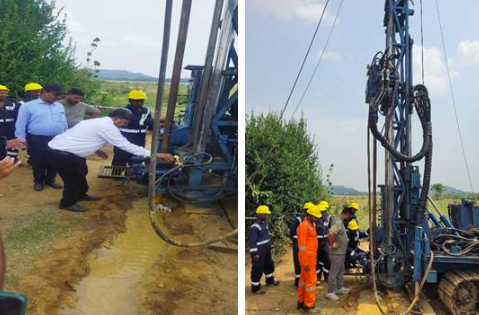
Coal India is investing nearly ₹50,000 crore with joint-venture partners in three coal gasification projects. Here is how coal gasification can boost India’s energy security and reduce import dependence.

Coal India Ltd (CIL), the world’s largest coal producer, is preparing for a significant transformation of its business model. The state-run mining giant is lining up nearly ₹50,000 crore for coal gasification projects with joint-venture partners, as it seeks to create new businesses beyond conventional coal mining.
The move is significant because coal gasification can convert coal into synthetic gas, or syngas, which can subsequently be used to produce products such as synthetic natural gas, methanol, ammonia, hydrogen and other chemicals.
For Coal India, therefore, the objective is not simply to sell more coal. It is to convert coal into higher-value products, potentially creating an entirely new industrial ecosystem around India’s domestic coal reserves.
What is Coal Gasification?
Coal gasification is a process in which coal is converted into a gaseous mixture, primarily containing carbon monoxide and hydrogen, through controlled reactions involving oxygen, steam and heat.
The resulting gas, known as syngas, can be processed further to produce a variety of industrial products.
In simple terms:
Coal → Gasification → Syngas → Chemicals/Fuels/Industrial Products
This is different from simply burning coal to generate electricity. Instead of using coal directly as a fuel, gasification seeks to use it as a feedstock for manufacturing.
That distinction is at the heart of India’s strategy.
Why Is Coal India Investing ₹50,000 Crore?
Coal India has traditionally been overwhelmingly dependent on coal mining and sales. But the energy landscape is changing rapidly, with greater emphasis on renewable energy, cleaner technologies and reducing dependence on imported fuels.
The company’s ₹50,000-crore gasification programme is therefore part of a broader diversification strategy.
According to recent statements by Coal India Chairman and Managing Director B. Sairam, the company is pursuing three coal-gasification projects with joint-venture partners and is also exploring additional opportunities with the governments of Chhattisgarh, Odisha and Maharashtra.
Coal India is simultaneously looking at areas such as critical minerals and renewable energy, indicating that the company is preparing for a business environment in which coal mining will no longer be its only major growth engine.
Coal Gasification Could Reduce India’s Import Dependence
One of the biggest reasons behind India’s push for coal gasification is energy security.
India imports significant quantities of several products that can potentially be produced through coal-gasification-based processes. The government’s new surface coal/lignite gasification scheme specifically identifies dependence on imports of LNG, urea, ammonia and methanol as an area that gasification could help address.
The Union Cabinet approved a ₹37,500-crore scheme in May 2026 to promote surface coal and lignite gasification projects. The programme aims to support gasification of approximately 75 million tonnes of coal/lignite and contribute to India’s national target of gasifying 100 million tonnes of coal by 2030.
The government has also extended the coal-linkage tenure for coal-gasification projects to as much as 30 years, providing greater certainty for long-term investments.
From Coal to Syngas: The Industrial Opportunity
The real opportunity for Coal India lies downstream.Instead of simply extracting coal and selling it, gasification allows the company and its partners to potentially participate in the production of:
Synthetic Natural Gas (SNG)
Methanol
Ammonia
Hydrogen
Fertiliser feedstock
Chemicals
Other industrial products
This could fundamentally change the economics of coal.
A tonne of coal used as a raw material for a chemical or gasification plant can potentially generate a much broader industrial value chain than conventional coal sales.
For India, it also creates the possibility of developing coal-to-chemicals and coal-to-gas industries using domestic resources.
Is Coal Gasification a Clean Technology?
Coal gasification should not automatically be described as a “green” technology. Gasification can potentially offer efficiency and pollution-control advantages compared with some conventional coal uses, but the process remains carbon-intensive unless technologies such as carbon capture, utilisation and storage (CCUS) are incorporated.
That is why India’s gasification strategy is better understood as an energy-security and industrial-diversification strategy, rather than simply a replacement for renewable energy.
The long-term success of the technology will depend on its economics, carbon intensity, availability of suitable coal, technology choices and the development of downstream markets.
Coal India’s Bigger Transformation
The ₹50,000-crore gasification programme fits into a much larger transformation at Coal India. The company is simultaneously targeting higher coal production, investing in evacuation infrastructure and exploring new businesses such as renewable energy and critical minerals. Coal India has set a target of reaching 1 billion tonnes of annual coal production by FY30, while also committing major investments in logistics and evacuation.
This creates an interesting strategic contradiction: Coal India is preparing to produce more coal while also investing in technologies designed to extract greater value from coal beyond conventional power generation.
In other words, the company’s strategy is not necessarily about moving “away from coal” immediately. It is about changing what coal means to the business.
The Bigger Picture for India
India has abundant coal reserves but remains dependent on imports for several energy and industrial products. Coal gasification offers a potential bridge between these two realities.
If the technology becomes commercially competitive at scale, India could use its domestic coal resources to manufacture products that are currently dependent on imported feedstocks.
That could have implications for energy security, the chemicals industry, fertilisers, gas availability and industrial self-reliance.
The government has already established a national target of 100 million tonnes of coal gasification capacity/use by 2030, while Coal India is positioning itself as one of the largest participants in this emerging ecosystem.
The Bottom Line
Coal India’s nearly ₹50,000-crore gasification push is more than another investment in the coal sector. It represents an attempt to transform India’s biggest coal producer from a company primarily focused on extracting and selling coal into one that can also convert coal into gas, chemicals and industrial feedstocks.
If the projects achieve commercial viability, they could give Coal India a new growth engine while supporting India’s broader objective of reducing import dependence.
But the real test will be execution: Can coal gasification become economically competitive while meeting India’s increasingly demanding environmental goals?
That will determine whether Coal India’s ₹50,000-crore bet becomes a new chapter in India’s energy story—or remains an expensive experiment in extending the life of coal.
 Energy News