
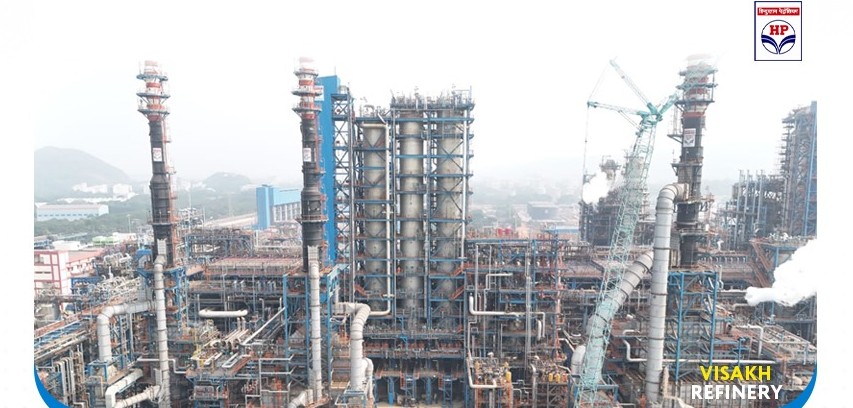
Hardeep Singh Puri highlights India’s refining expansion, with capacity targeted at 320 MMTPA by 2030–32 and 400–450 MMTPA in the long term.
New Delhi: At a time when several major global energy markets are witnessing refinery closures and capacity rationalisation, India is moving in the opposite direction by investing in new refineries and expanding existing facilities. Union Minister for Petroleum and Natural Gas Hardeep Singh Puri has highlighted India’s growing refining capabilities, describing the country as an emerging global refining and energy hub.
According to Puri, India’s refining capacity is currently around 267 million metric tonnes per annum (MMTPA). The country is targeting an expansion to 320 MMTPA by 2030–32, with a longer-term ambition of reaching 400–450 MMTPA.
Emphasising the contrast between India and international markets, Puri said:
“At a time when refining capacity is declining in several parts of the world, India is moving in the opposite direction, building new refineries while simultaneously expanding and modernising existing ones.”
The minister shared these remarks while highlighting India’s refining expansion strategy and the growing importance of domestic energy infrastructure.
India Strengthens Its Refining Infrastructure
India’s refining expansion strategy focuses on establishing new facilities, upgrading existing refineries and improving processing capabilities to meet rising domestic demand.
The Barmer refinery in Rajasthan is an important project in this expansion drive. Alongside greenfield projects, several existing refineries are also undertaking capacity enhancement and modernisation.
Puri has described the Barmer refinery as the “Jewel of the Desert”, highlighting its potential to generate employment, support industrial development and strengthen India’s petrochemical manufacturing capabilities. The project is designed to process 9 MMTPA of crude oil and produce more than 2.4 million tonnes of petrochemicals.
Europe and China Face Refinery Restructuring
Several established refining markets, particularly in Europe and China, are witnessing refinery closures, consolidation and capacity adjustments.
European refiners are facing pressure from changing fuel consumption patterns, high operating costs, decarbonisation policies and competition from newer facilities. China’s refining sector is also undergoing structural changes, with older and less competitive plants facing rationalisation.
Against this backdrop, India’s investment in refining infrastructure could provide opportunities to strengthen its position in international petroleum product markets.
Puri had also highlighted India’s potential to emerge as a global refining hub, noting that global refinery closures could reshape the competitive energy landscape.
Barmer Refinery to Strengthen Petrochemical Production
The Barmer refinery-cum-petrochemical complex is expected to become an important industrial centre in western Rajasthan.
The project is being developed by HPCL Rajasthan Refinery Limited, a joint venture between Hindustan Petroleum Corporation Limited and the Rajasthan government.
Apart from producing petrol and diesel, the integrated facility will manufacture petrochemical products, helping reduce dependence on imported petrochemicals and supporting downstream industries.
Puri has previously said that the project would contribute to India’s ambition of achieving 450 MMTPA refining capacity.
India’s Ambition Goes Beyond Domestic Energy Security
India’s refining strategy is not restricted to meeting domestic fuel requirements. Increasing refining capacity can also strengthen petroleum product exports, support petrochemical manufacturing and create new investment opportunities.
The next phase of expansion is expected to focus on:
- Increasing crude oil processing capacity.
- Modernising existing refineries.
- Expanding petrochemical production.
- Improving operational efficiency.
- Strengthening India’s position in global petroleum product exports.
With rising energy demand and growing industrial requirements, India’s refining expansion could become a major pillar of its long-term economic and energy security strategy.
 Aman
 Energy News