
Hardeep Singh Puri says India’s 1.07 lakh fuel outlets maintained uninterrupted supplies despite the Russia-Ukraine war, Hormuz disruption and Red Sea attacks.
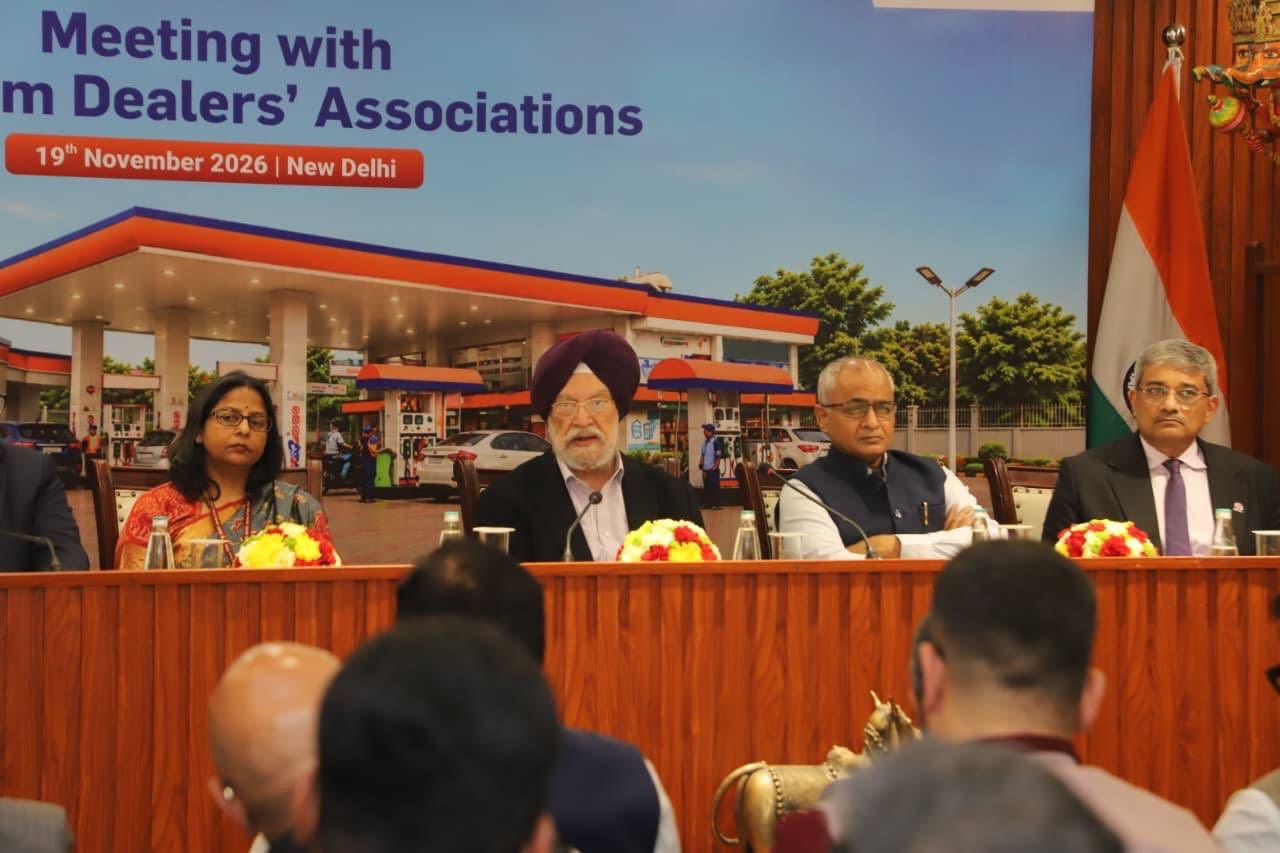
New Delhi: Union Minister for Petroleum and Natural Gas Hardeep Singh Puri has praised India’s petroleum companies and fuel retailers for maintaining uninterrupted fuel supplies despite multiple global geopolitical crises over the past four years. Addressing a meeting with petroleum dealers in Delhi, the minister said that none of India’s approximately 1.07 lakh retail fuel outlets had experienced a dry-out during this challenging period.
Puri highlighted the impact of the Russia-Ukraine war, disruptions in the Strait of Hormuz and attacks in the Red Sea, which created significant challenges for global energy markets and oil supply chains.
Recalling the beginning of the Russia-Ukraine conflict in February 2022, the minister said India had faced successive challenges to its energy security. The closure of the Strait of Hormuz on February 28, 2026, created another major disruption, with restrictions affecting shipping movements from multiple directions.
He said that even amid these difficulties, Indian oil companies successfully managed to secure and transport crude oil cargoes to ensure domestic energy supplies. Before the situation could fully stabilise, attacks in the Red Sea added another layer of uncertainty to international shipping and energy transportation.
“It has been a very difficult period. But I want to congratulate all of you,” Puri said, acknowledging the contribution of petroleum dealers and oil marketing companies in maintaining fuel availability across the country.
India Avoided Fuel Shortages Despite Global Disruptions
The minister emphasised that maintaining uninterrupted fuel supplies across approximately 1,07,000 retail outlets was a significant achievement, particularly when several countries experienced sharp increases in petroleum prices and supply-related challenges.
He also compared India’s fuel pricing situation with international markets, pointing out that petrol and diesel prices increased by 50-60% in many countries during the reference period.
According to Puri, India managed to contain the impact of international crude oil price volatility through government interventions, including reductions in central excise duty on petrol and diesel.
Excise Duty Cuts Helped Contain Fuel Prices
Puri highlighted three rounds of central excise duty reductions undertaken by the government in November 2021, May 2022 and March 10, 2026.
He said the latest reduction involved a cut of Rs 10 per litre in central excise duty on petrol and diesel, helping prevent an increase in retail fuel prices despite international market pressures.
The minister credited Prime Minister Narendra Modi’s decisions on fuel taxation with providing relief to consumers during a period of significant global energy uncertainty.
Energy Security Remains a Major Priority
India’s experience over the past four years has demonstrated the importance of diversified energy sourcing, resilient supply chains and coordination between oil marketing companies and petroleum retailers.
With geopolitical tensions continuing to influence international oil markets and critical shipping routes, maintaining adequate fuel stocks and uninterrupted distribution remains essential for India’s energy security.
Puri’s remarks underline the role played by India’s petroleum distribution network in ensuring that consumers continued to receive petrol and diesel despite disruptions in the global energy landscape.
 Aman
 Energy News